
Materials
Dr. Fixit vs BASF: which materials actually matter
Both are good. Neither will save a badly prepared substrate. What the brand on the drum does and doesn’t tell you, and the questions worth asking about materials instead.
Mahadev Waterproofing, Thane West
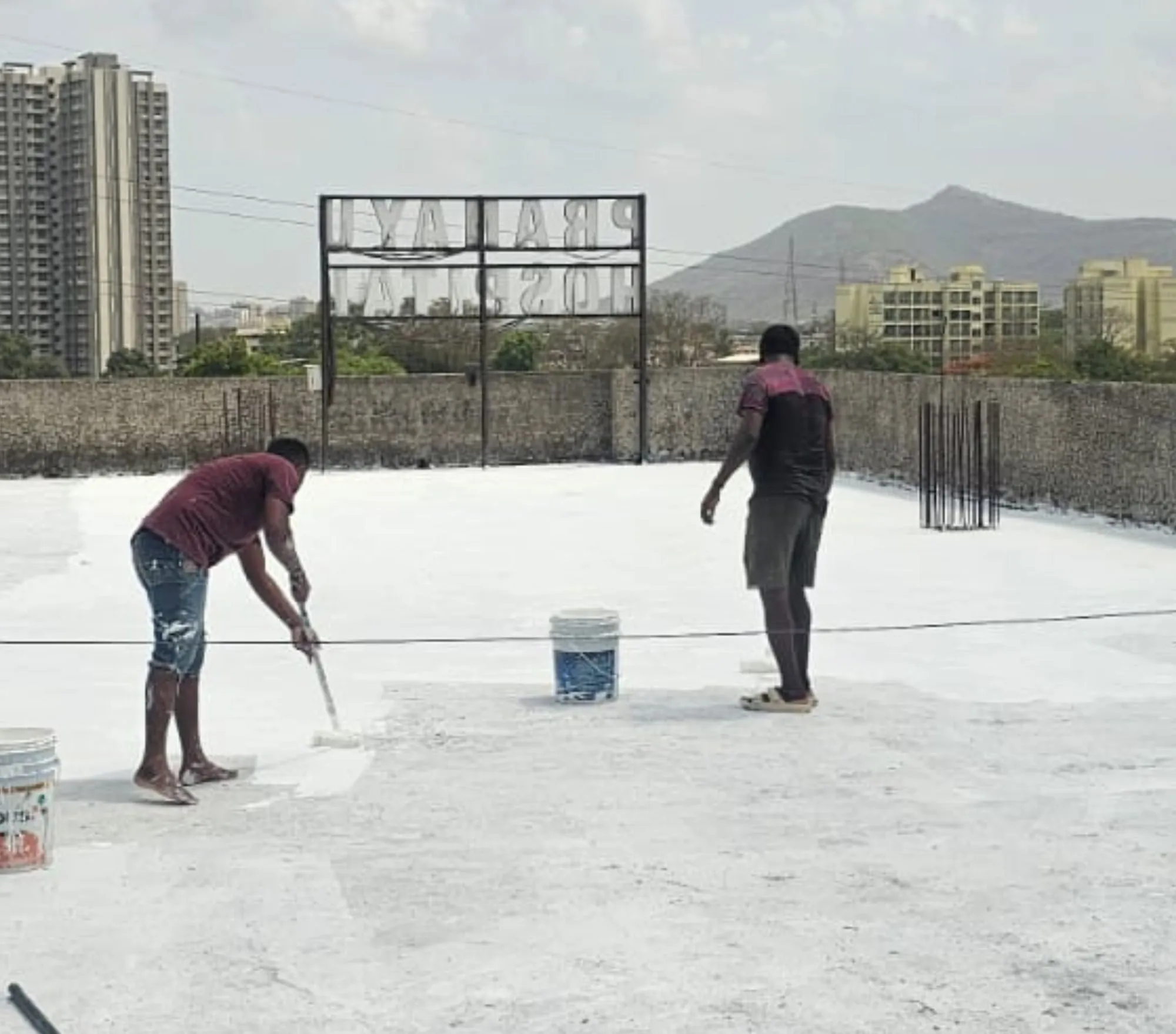
We are a Dr. Fixit certified applicator and we hold a Dr. Fixit LEAD programme certification, both of which are on our about page. We also specify BASF, Pidilite, Sika, Fosroc, STP, Asian Paints and Nerolac depending on the job. So the honest answer to “Dr. Fixit or BASF?” is: whichever one makes the right product for what your building needs, and it is rarely the question that decides whether the work lasts.
Here is what the brand does and does not tell you.
What the brand genuinely gets you
A published specification. Every serious manufacturer publishes the build-up: primer, coats, coverage in kg/m², recoat intervals, curing regime, dry-film thickness. That document is what makes a job checkable. Without it, “two coats of waterproofing” means whatever the applicator decides on the day.
Batch consistency. A sealed pack from a known manufacturer performs the way the datasheet says. Unbranded material bought loose does not, and the failures show up unevenly across the same terrace.
A product warranty, sometimes. Where the system carries a manufacturer’s warranty and the build-up has been followed exactly, that paperwork can be issued alongside the contractor’s own.
What it does not get you
Preparation. No coating bonds to loose plaster, laitance, or a delaminated layer left in place. The most expensive material in the world applied over an unsound substrate fails at the substrate.
Coverage. A system rated at 1.5 kg/m² applied at 0.9 kg/m² is not that system any more. Under-application is the single most common cause of early failure in liquid systems, and it is invisible once it dries.
Detailing. Parapet turn-ups, drain outlets, pipe collars, construction joints. Waterproofing fails at the junctions, and no product line item covers whether they were reinforced properly.
That the drum contains what the label says. The oldest trick in the trade is a branded quotation and unbranded material once work starts. This is why we deliver material to site in sealed packs and why the brand and product name are printed on the quotation — so there is something to check against.
Broadly, where each one fits
This is not a league table, it is a fit question:
- Dr. Fixit (Pidilite) — the widest range in the Indian residential market, strong on cementitious systems, integral admixtures and the everyday terrace and bathroom products. Excellent contractor training and site support, which matters more than it sounds.
- BASF / Master Builders — deep on construction chemicals for structural work: injection resins, repair mortars, high-performance admixtures. Where the job is structural repair alongside waterproofing, this is often where the specification lands.
- Sika, Fosroc — comparable specialist ranges, strong in joint sealing and injection systems.
- STP — long-standing bituminous membrane range; a regular choice on large roofs.
- Asian Paints, Nerolac — the finish and protective coating end, plus roof coating systems.
Most real jobs use more than one manufacturer, because the primer, the membrane, the joint sealant and the topcoat are not all best from the same place. What matters is that products used together are compatible and that whoever specified them can say why.
The questions worth asking instead
When you have two quotations in front of you, brand is one line. These are the ones that separate them:
- What is the product name and grade? Not “waterproofing chemical” — a name you can look up.
- What coverage rate, in kg/m², and over what measured area? Multiply it out. Does the material quantity on the quote match?
- What preparation is included? What comes off, what gets ground, what gets primed.
- How are the junctions detailed? Parapets, drains, pipe collars — ask specifically.
- What test proves it worked? A ponding or flood test, and for how long.
- Is the warranty on paper, and when do I get it?
A contractor who answers all six the same way twice is worth more than a brand name on its own.
Where we stand
Materials are named by brand and product on our quotation, delivered to site in sealed packs, applied at the manufacturer’s stated coverage, and checked — dry-film thickness on liquid systems, a ponding or flood test before handover, and a thermal scan afterwards to confirm the leak has actually stopped. The signed 10-year warranty is handed over before work begins.
See our chemical treatment and cementitious waterproofing pages, or call +91 99875 06070.